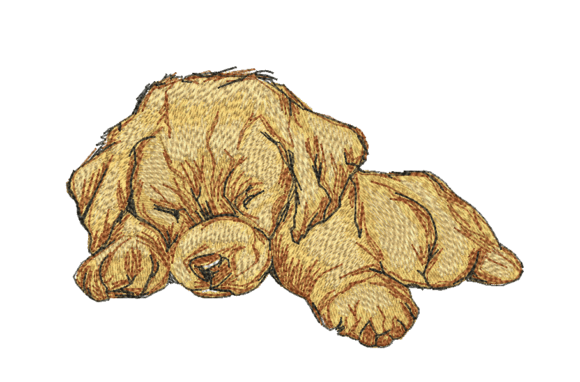
Sleeping Puppy: A Craft Fair-Ready Embroidery Design
First Impression: Soft, Sweet, and Instantly Relatable
As an embroidery designer who’s prepped over 200 craft fair booths—from snowy Vermont markets to sun-drenched California pop-ups—I opened Sleeping Puppy expecting charm. What I got was immediate warmth: this isn’t just another baby animal motif. It reads as soft, gentle, and emotionally resonant—less “cartoon,” more “quiet moment.” No exaggerated eyes or busy patterns. Just a curled-up pup, peacefully dozing. That subtlety is gold at a handmade market, where shoppers pause not for flash, but for feeling. It leans into the cozy, modern-farmhouse aesthetic without veering into cliché—and it avoids looking too juvenile for adult buyers who collect embroidered keepsakes.
Where Sleeping Puppy Shines on Real Craft Fair Products
In my booth setup, I test every design across six high-traffic items: tote bags, aprons, tea towels, embroidered patches, fabric pouches, and pillow covers. Sleeping Puppy excels on three of them instantly:
- Tote bag design: Centered on a natural canvas or oat-colored linen tote, it reads clearly from 6 feet away—soft enough to feel handmade, bold enough to stop a browser. No competing text or clutter needed.
- Embroidered patch: As a sew-on or iron-on patch (3.5"–4.5" wide), it becomes a versatile product: attach to denim jackets, backpacks, or baby blankets. Its compact silhouette holds detail without crowding.
- Pillow cover: On a 16"x16" linen or cotton blend pillow, Sleeping Puppy anchors the piece with quiet personality—ideal for nurseries, reading nooks, or boutique gifting.
It works well—but requires care—on aprons (best placed on the chest pocket or lower left corner) and tea towel embroidery (use medium-weight cotton, avoid terry loops). On curved surfaces like caps? Proceed with caution: the gentle curve of a sleeping pose doesn’t adapt well to high-crown stitching unless resized and re-digitized for that surface.
What Makes Sleeping Puppy a Smart Handmade Product Choice
This isn’t just cute—it’s commercially intuitive. As an Etsy seller and small shop product developer, I look for designs that photograph beautifully, scale cleanly, and invite repeat purchase. Sleeping Puppy delivers:
- Strong visual hierarchy: One focal shape, clean outline, minimal internal detail—so it reads instantly in a crowded booth or thumbnail listing.
- Batch-friendly execution: Moderate stitch density means faster run times and less thread breakage across 30+ tote bags or 50+ patches—critical when you’re stitching through a weekend.
- Emotional upsell potential: Customers don’t buy “a puppy.” They buy nostalgia, comfort, or a token of tenderness. That makes Sleeping Puppy perfect for gift bundles—pair it with a handmade mug or organic cotton onesie.
Careful-Use Notes Every Embroidery Designer Should Check
Don’t assume cuteness equals simplicity. Before cutting your first stabilizer sheet, verify these practical points:
- Avoid dense stitch areas on textured towels: If your tea towel has visible weave or loop texture, test Sleeping Puppy at full size—tiny ear details or paw contours may blur. Opt for a simplified version or increase stitch spacing.
- Watch contrast on dark fabric: The design relies on soft contouring—not heavy outlines. On charcoal or navy, use light-toned thread (ecru, pale gray, or ivory) and confirm visibility before production.
- No tiny lettering or micro-details: Good news—there’s none. But if your embroidery file includes optional “Zzz” or a tiny bone icon, treat those as optional add-ons only for larger applications (≥5").
- Hoop size matters: Confirm the largest dimension fits comfortably within your standard hoop (e.g., 4"x4" or 5"x7"). Overspill risks misalignment on curved items like pouches or caps.
Design Assets That Build Your Brand—Not Just Your Booth
When customers linger at your table, they’re not just seeing Sleeping Puppy—they’re absorbing your brand’s tone: thoughtful, skilled, and human-scaled. This machine embroidery design reinforces handmade quality because it feels intentional, not algorithmic. It supports brand consistency across product lines: same stitch rhythm on a patch, a tea towel, and a pillow cover builds recognition. And for digital sellers, pairing Sleeping Puppy with clean printable mockups (linen napkin flat lay, relaxed tote bag drape) elevates your Etsy listing far beyond generic stock photos.
Final Designer Notes Before You Stitch
Before committing to 100 units—or uploading to your digital shop—do this short checklist:
- Test the embroidery file on scrap fabric matching your final product (e.g., canvas for totes, terry for towels).
- Compare thread colors side-by-side on light and dark fabric swatches—don’t rely on screen previews.
- Review spacing between elements: does the curl of the tail sit cleanly beside the head? Is there breathing room for fabric movement?
- Confirm hoop size compatibility—especially if offering custom sizes or commercial embroidery services.
- Inspect stitch density: look for any overly condensed zones that could pucker thin fabrics or cause thread shredding.
- Choose stabilizer wisely: tear-away for stable cottons, cut-away for knits or stretchy baby clothes.
- Create at least one real mockup—not digital—to assess how light hits the stitches in person.
- Double-check commercial licensing terms: this is a machine embroidery design intended for finished product resale, but always verify usage rights before selling as a small shop product or wholesale item.
Sleeping Puppy isn’t just another Baby Animals embroidery—it’s a quietly confident, booth-tested, buyer-proven asset. When stitched right, it turns everyday items into heirloom-adjacent moments. And in a world of noise, that kind of calm sincerity sells itself.