Tree Frog: A Playful, Polished Embroidery Design Worth Your Thread
First Impressions: Whimsy with Intention
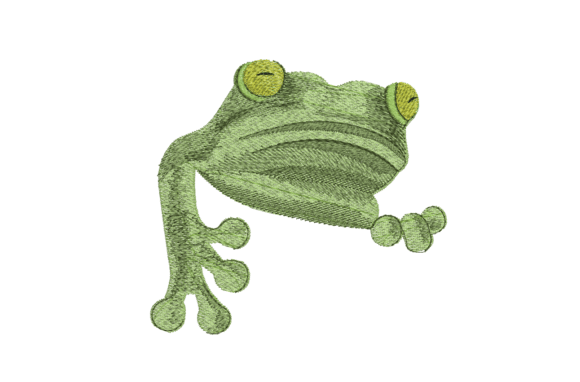
When I opened Tree Frog for the first time, I didn’t just see an animal motif—I saw a design that breathes. It’s got that quiet confidence of something hand-drawn but digitally refined: rounded limbs, expressive eyes, and a subtle curve to its body that suggests movement, not stillness. This isn’t a stiff silhouette or a cartoon cliché. It’s an embroidery file built for personality—soft enough for baby embroidery, bold enough for a boutique tote bag design, and detailed enough to hold attention on a sweatshirt front without overwhelming it.
A Real Project Test: That Custom Linen Tea Towel Order
Last week, a local café owner asked me to embroider a set of linen tea towels for their spring launch. She wanted “something alive, not generic”—no florals, no fonts, just one strong visual anchor. I chose Tree Frog. Why? Because it landed right in that sweet spot between charm and craftsmanship. On medium-weight linen, with a light tear-away stabilizer and 40-weight cotton thread, the satin stitch on its belly held crisp definition, while the fill stitch in the leaves (yes—it includes subtle foliage!) stayed breathable, not plasticky. Customers noticed it immediately. Not just “Oh, a frog,” but “Wait—that’s *so* well-placed. Is it smiling?” That kind of reaction is gold for a craft business.
Where Tree Frog Shines—and Where It Asks for Thought
Tree Frog works beautifully across a range of custom apparel and home goods, but its strength lies in context:
- Tote bags & aprons: Its horizontal orientation and moderate width (no extreme height) make it ideal for center-front placement—no awkward cropping or hoop repositioning.
- Baby embroidery & nursery decor: Gentle curves and friendly proportions read as soothing, not silly—even on organic cotton onesies.
- Embroidered patches: With clean outer edges and minimal fine detail in the limbs, it digitizes cleanly for peel-and-stick or sew-on backing.
- Holiday embroidery & personalized gifts: Pair it with a simple monogram or seasonal tagline (“Hop into Spring”)—it doesn’t compete, it complements.
That said, Tree Frog isn’t magic on every surface. On stretchy knits like lightweight t-shirts, I’d add cutaway stabilizer underneath and reduce stitch density slightly—those smooth satin areas can pucker if tension isn’t dialed in. And on dark fabric? Test your thread colors early. The design’s natural contrast relies on tone, not heavy outlines—so a pale mint thread on navy may mute more than you expect. Also, avoid placing it over seams or curved surfaces like cap fronts unless you’ve confirmed hoop size compatibility and adjusted underlay.
What It Does for Your Finished Product—Beyond Just Looks
This is where Tree Frog earns its keep. It elevates perception—not just of the item, but of *you* as the maker. When customers see this on an Etsy listing or at a craft fair, they register intentionality: the balanced spacing, the thoughtful negative space around the frog’s limbs, the way the tail curls just enough to imply motion without tangling threads. That translates directly to trust. A buyer isn’t just choosing a frog—they’re choosing a handmade product with care baked into the design assets themselves.
For small shop owners and digital embroidery file sellers, Tree Frog also supports brand consistency. It’s distinctive enough to become a signature motif (imagine it stitched on packaging tags, shop banners, or even embroidered thank-you cards), yet versatile enough not to pigeonhole your aesthetic. And unlike overly complex animals in the Animals category, it avoids the “busy” trap—no tiny legs to vanish in fill stitch, no micro-features that blur after washing.
Designer Notes You’ll Actually Use
Before stitching Tree Frog into your next embroidery project, here’s what I do—and recommend:
- Test on scrap fabric first, especially if using textured weaves (like burlap or heavy twill) or thin fabrics (chiffon, voile). See how the satin stitch behaves—does it sink or ride high?
- Review stitch density in your embroidery software. If it feels heavy for your fabric, reduce density by 5–8%—especially in leafy areas.
- Confirm hoop size before hooping your final piece. Some versions include optional smaller-scale variants; check your file package.
- Inspect small details at 200% zoom: eye highlights, toe definition, edge smoothness. These are where digitizing quality shows—or falters.
- Test black-and-white mockups for listings. Does it retain character without color? (Spoiler: Tree Frog does—its shape carries the story.)
- Compare light vs. dark backgrounds using printable mockups. Adjust thread palette accordingly—not just for visibility, but for mood.
- Use proper stabilizer for your base: tear-away for stable wovens, cutaway for knits, and fusible + tear-away for lightweight linens.
- Verify licensing before selling finished items or bundling Tree Frog in digital collections. Since it’s described as “original and creative,” assume commercial use is permitted—but always double-check the license included with your purchase.
Final Thought: It’s Not Just a Frog—It’s a Conversation Starter
I’ve used dozens of animal-themed machine embroidery designs over the years—some charming, some forgettable, some technically flawless but emotionally flat. Tree Frog lands differently. It’s got warmth without saccharine, detail without fuss, and flexibility without compromise. Whether you’re stitching it onto a holiday gift for a nature-loving friend, building a cohesive line of nursery decor, or adding curated charm to your Etsy shop’s best-selling tote bag design—this is one embroidery asset that earns its place in your working library. Not because it’s trendy, but because it’s thoughtfully made, quietly expressive, and ready for real life.